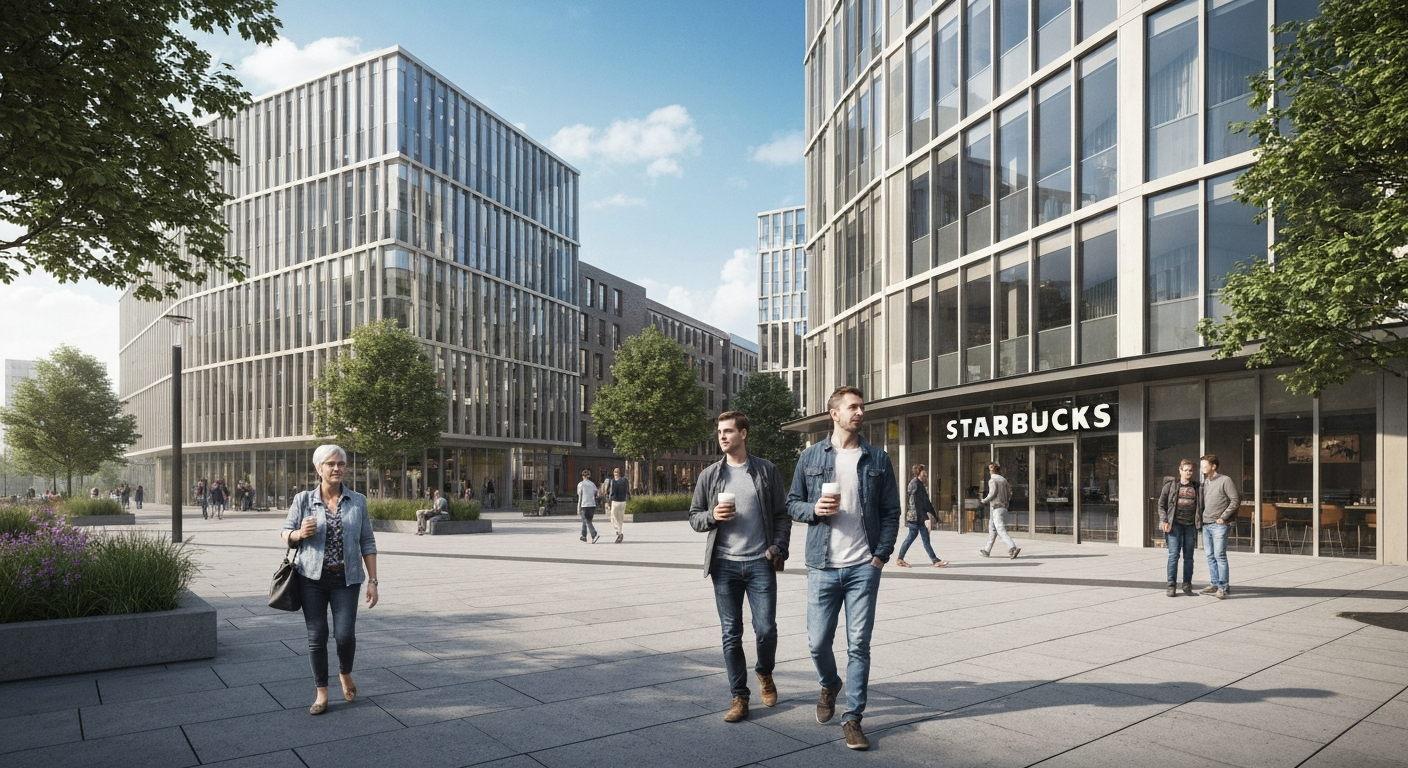
Key Highlights
- The "Starbucks Effect" describes how proximity to the coffee shop has historically boosted property values.
- Homes near a Starbucks saw values rise 96% between 1997 and 2014, far outpacing the national average.
- The presence of the brand is often seen as a sign of neighborhood desirability and economic upswing.
- Recent closures of 400 stores are causing investors to question the future of this effect on real estate values.
- While a Starbucks exit can signal decline, other brands like Whole Foods also impact home values.
Introduction
Have you ever wondered if that corner coffee shop does more than just serve lattes? For decades, real estate investors have sworn by the "Starbucks Effect," a phenomenon where the arrival of a Starbucks in a neighborhood signals a coming rise in property values. BiggerPockets reports that this trend has been a reliable indicator of growth and desirability. But with hundreds of stores now closing, the real estate world is watching closely to see if this long-standing rule still holds true.
Understanding the Starbucks Effect in Real Estate
The Starbucks Effect is a powerful concept in real estate that links the presence of the coffee giant to increasing home prices and real estate values. When a Starbucks opens, it’s often perceived as a stamp of approval on a neighborhood, suggesting that the area is attractive to buyers and renters and is on an upward trend.
This perception can drive consumer demand, leading to higher rental income for landlords and appreciating home values for owners. But is Starbucks the cause of this growth, or just a very visible symptom? Let's explore what the effect is and how it actually works.
What Is the Starbucks Effect and How Does It Develop?
The Starbucks Effect isn't just about a love for coffee; it's about what the brand represents. For years, a new coffee shop with the familiar green-and-white awning acted as a magnet for a neighborhood. Its arrival often signaled that an area was already experiencing an upswing, attracting other major retailers, higher-income residents, and savvy investors.
According to senior economic research analyst Hannah Jones, Starbucks doesn't single-handedly cause property values to rise. Instead, the company is strategic, choosing to open stores in neighborhoods where factors like economic growth and rising demand are already in motion. The company essentially follows the heat, identifying areas with momentum.
For investors and homebuyers, the presence of a Starbucks became a simple, reliable indicator of a neighborhood's health and potential. This change in consumer behavior and investor confidence is what truly develops the end of the Starbucks effect, solidifying the area's appeal and contributing to a continued rise in home prices.
The Origins of the Starbucks Effect in U.S. Housing Markets
The concept gained widespread attention after a 2015 Zillow report revealed some startling numbers. Between 1997 and 2014, homes in the United States located within a quarter-mile of a Starbucks appreciated by 96%. During that same period, national home prices only rose by 60%. This significant difference was enough to convince many that a new Starbucks was a blessing from the "real estate gods."
This phenomenon isn't exclusive to Starbucks. Other premium brands, like Whole Foods, create a similar feeling of an upscale community. As real estate broker Todd Drowlette explains, people today consider a neighborhood’s total package, including the type of neighborhoods and amenities available. Convenience and desirable amenities are key factors that add to an area's appeal.
However, with Starbucks recently closing 400 stores, many are wondering if the effect is fading. These closures, especially in dense urban areas, challenge the long-held belief that the brand is a permanent fixture of a thriving community with numerous physical locations, raising questions about its future influence on housing markets.
Factors That Drive the Starbucks Effect on Property Values
The Starbucks Effect doesn't happen in a vacuum. Several key factors work together to boost property values when one of the brand's iconic locations opens nearby, having a significant impact. It's more than just coffee; it's about what the presence of that coffee shop says about the area’s appeal and its residents.
The company's careful selection of its Starbucks locations plays a huge role, as do the demographics of the people who live there. Let's look at how proximity and urban trends combine to amplify this impact on both residential and commercial real estate.
Proximity to Starbucks and Neighborhood Desirability
Living close to a Starbucks often means you're in a neighborhood on the rise. The simple convenience of having amenities within a short distance adds to the desirability, reflecting how people want convenience today. People today crave convenience, and a nearby coffee shop is a daily luxury that many are willing to pay a premium for through higher home prices or rent.
This proximity does more than just offer a quick caffeine fix. A busy Starbucks generates consistent foot traffic, which benefits surrounding businesses and makes commercial corridors feel more vibrant and safe. This activity can attract other retailers and services, further enhancing the area. The presence of a Starbucks is often a signal of:
- A thriving local economy
- Good walkability and accessibility
- A "total package" neighborhood with desirable amenities
- A community that is attracting investment
Ultimately, the proximity to a Starbucks can change neighborhood trends by acting as an anchor tenant. It reinforces the idea that the community is a convenient and pleasant place to live, which in turn drives up demand and property values.
How Demographics and Urban Trends Amplify the Impact
The impact of a Starbucks is often magnified by the demographics and trends of the area it enters. The company famously conducts extensive research on economic metrics before opening a new store, targeting urban locations with specific consumer habits. They look for neighborhoods with rising incomes, a growing population of young professionals, and a demand for premium goods and services.
Trends like the growing desire for walkability also play a crucial role. In dense urban areas, residents value being able to walk to cafes, shops, and restaurants. A Starbucks often becomes a cornerstone of these walkable communities, signaling that the neighborhood caters to a modern, convenience-oriented lifestyle. Its presence validates that the area is already desirable to a certain demographic.
As a result, Starbucks doesn’t just land anywhere; it chooses places where its brand will resonate with existing consumer habits, including the potential for corporate jobs. This strategic placement in areas already primed for growth is a key reason the effect has been so pronounced, as the coffee shop becomes part of a larger, positive neighborhood transformation.
The Impact of Starbucks Openings and Closures on Home Prices
For decades, Starbucks openings have been associated with positive economic growth and rising home values. The arrival of the green-and-white awning was a clear signal to investors and residents that a neighborhood was on the upswing.
Now, with hundreds of closures across North America, the reverse is being tested. The departure of such a prominent brand can create a perception of decline, raising concerns about its impact on property values. Let's examine both sides of this coin: the boom of an opening and the potential bust of a closure.
Rising Property Values When a Starbucks Arrives
The arrival of a new Starbucks has historically been a powerful indicator of future economic growth. For landlords, this often meant the potential for higher rental income, as tenants are drawn to the convenience and vibrancy the brand brings. For homeowners, it translated directly into appreciating home prices at a much faster rate than in other areas.
A landmark Zillow study highlighted this difference, showing just how significant the impact could be. This data solidified the belief that a Starbucks was a reliable sign of a healthy, growing real estate market. This trend was even noted by publications like The Wall Street Journal, which has reported on how consumer habits, like eating out, affect local economies.
1997–2014 — Homes near Starbucks appreciated 96% vs. 60% national average
This dramatic difference shows that while the entire country saw growth, neighborhoods with a Starbucks experienced a supercharged boost in value.
Community and Market Reactions to Starbucks Store Closures
Just as an opening can signal growth, Starbucks closures in Canada can create a perception of decline. While a single closure may not cause significant harm, a cluster of them in one area can trigger concern among investors and residents. This can have the opposite impact of an opening, potentially hurting neighborhood stability.
Former Starbucks real estate broker Todd Drowlette noted that multiple closures could "begin the downward spiral" that negatively affects surrounding property values. Analysts at Forbes point out that this is because the departure of a major anchor tenant can lead to questions about the area's economic health. The market reactions often include:
- Worries about declining foot traffic for remaining businesses.
- Concerns over falling rental income as the area becomes less desirable.
This "reverse halo effect" is a real concern in cities like Philadelphia and Washington, D.C., where several stores have recently shut down. The long-term impact on home values will depend on how quickly those vacant storefronts are filled and whether the neighborhood can maintain its appeal without the familiar green mermaid on the corner.
Conclusion
In summary, the Starbucks Effect is a fascinating phenomenon that demonstrates how the presence of a well-loved coffee shop can significantly impact property values in a community, such as Baltimore. Not only does it enhance neighborhood desirability, but it also reflects broader urban trends and demographics that shape real estate markets. Whether it's the excitement of new openings or the concerns surrounding closures, understanding this effect can provide valuable insights for homeowners and investors alike. As you navigate your real estate journey, keep an eye on local coffee culture and its influence on property values. If you'd like to explore how specific market changes could affect your property, feel free to reach out for a consultation!