Key Highlights
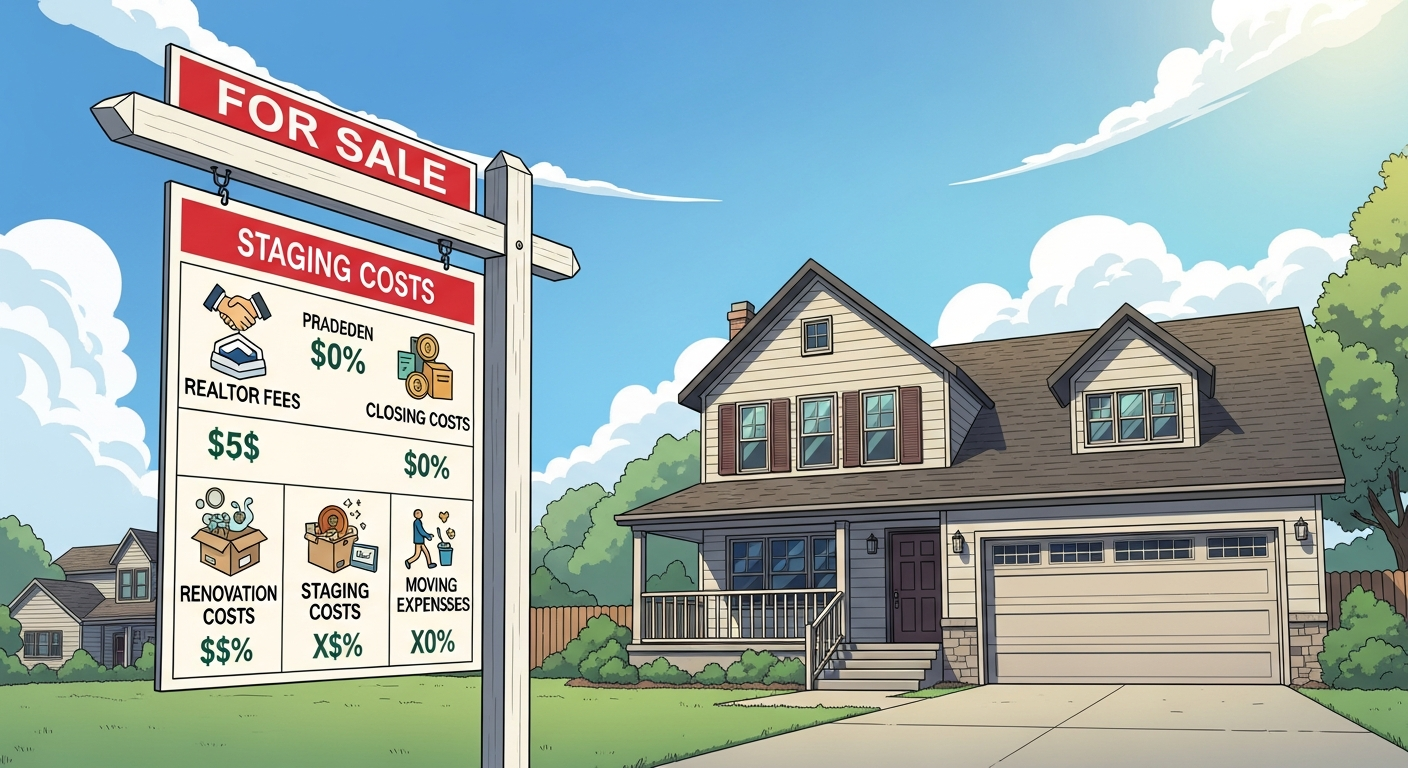
- Expect to pay between 9% and 10% of your home's final sale price on total selling costs.
- The largest expense is typically real estate commissions, which average around 5% to 6% of the home sale price.
- Sellers are also responsible for closing costs, which can range from 1% to 3% of the sale price.
- Additional expenses include home preparation, repairs, taxes, and moving costs.
- Understanding these fees, including agent fees, helps you accurately estimate your net proceeds from the sale.
Introduction
Selling a home is an exciting financial milestone, but many people are surprised by the costs involved. While the focus is often on the final home sale price, several expenses can reduce your overall net proceeds. From working with a real estate agent to navigating the final real estate transaction, understanding these costs is crucial. This guide will break down all the fees associated with selling a home so you can plan your budget and know exactly what to expect.
Overview of Home Selling Costs in the United States
When you sell your home, the expenses can add up quickly. Generally, home sellers can expect to pay around 10% of the home's sale price in total costs. This figure includes a wide range of fees, from agent commissions to closing costs and taxes.
The main costs involved in selling a home in the real estate market include real estate agent commissions, closing costs, home preparation expenses, and taxes. These fees are calculated based on your property's market value and can vary by location. Let's look closer at what these costs entail.
Typical Cost Breakdown for Sellers
To better understand where your money goes, it helps to see a clear breakdown of the typical expenses. While the exact amounts can vary, sellers should prepare for several key categories of costs that will be deducted from the home sale price.
Knowing these categories can help you create a more accurate budget for your sale. A general breakdown of expenses includes:
- Real estate commissions: Typically the largest fee, usually around 5% to 6%, split between the buyer's and listing agent.
- Closing fees: These cover title insurance, settlement fees, and transfer tax, often totaling 1% to 3%.
- Home preparation and repairs: This can include staging, cleaning, and minor fixes, ranging from 1% to 4%.
Each of these costs plays a role in the successful sale of your property. Planning for them ensures there are no surprises when it's time to close the deal.
Factors That Influence Final Expenses
The total cost of selling your home isn't a fixed number; it's influenced by several key factors. Your home's location, for instance, plays a significant role, as taxes and fees can vary dramatically from one state or city to another.
The condition of your property also matters. A home that needs significant work will naturally have higher repair costs. Other variables that can affect your final expenses include:
- Home value: Higher-priced homes will have larger commission and tax amounts, even if the percentages are the same.
- Agent commissions: While there are averages, commission rates can be negotiable.
- Local market conditions: In a seller's market, you may have more leverage to negotiate costs with the buyer.
- Negotiations: The final closing costs can change based on what you agree to cover for the buyer.
Understanding these influences helps you anticipate your potential expenses more accurately and make informed decisions throughout the selling process.
Key Terms to Understand in Home Sale Transactions
Navigating a home sale involves a lot of specific terminology. Getting familiar with these terms will help you feel more confident during the transaction and understand what your real estate agent is discussing.
These terms will appear on your official documents, so it's wise to know what they mean ahead of time. Here are a few essential terms to know:
- Asking Price: The initial price you list your home for on the market.
- Net Proceeds: The amount of money you receive after all selling costs, including commissions and fees, are deducted from the final sale price.
- Closing Date: The day ownership of the property officially transfers from you to the buyer.
- Attorney Fees: In some states, a real estate attorney is required to handle the closing, and their fees are part of your costs.
Knowing this vocabulary will empower you to ask the right questions and stay informed from listing to closing.
Real Estate Agent Fees and Commissions
One of the most significant costs you'll encounter is the real estate agent commission. This fee is paid to the agents for their services in marketing your home, finding a buyer, and navigating negotiations. The total commission is typically a percentage of the final sale price.
This fee covers both your listing agent and the buyer’s agent. While sellers have traditionally paid the full amount, recent changes mean these agent commissions are now more negotiable. Next, we'll explore average rates and how these fees are structured.
Average Agent Commission Rates
For a long time, the national average for real estate commissions has hovered around 5% to 6% of the home's sale price. This commission rate compensates both agents involved in the transaction for their expertise and effort.
However, the housing market is evolving. While 6% was a standard, rates can vary. As a seller, you will negotiate the commission with your listing agent. You may also decide to offer compensation to the buyer's agent to attract more potential buyers to your property. To see how this might look, consider this example for a $400,000 home:
Commission Breakdown / Percentage of Sale Price / Cost
Listing Agent Fee
3%
$12,000
Buyer's Agent Fee
3%
$12,000
Total Commission
6%
$24,000
Ultimately, the exact commission you pay will depend on your agreement with your agent and the customs in your local market. It's always a good idea to discuss the commission structure upfront.
How Commissions Are Split Between Agents
The total commission you pay doesn't all go into one person's pocket. It's typically split between the listing agent (also known as the seller's agent) and the buyer's agent. Historically, the seller paid the entire commission, which was then divided.
Under new rules, the agent commissions are "decoupled," meaning you negotiate your listing agent's fee separately. You can also choose whether to offer compensation to the buyer's agent. The commission is further split with each agent's brokerage. Here’s a simplified look at the split:
- Total Commission: The full percentage paid on the sale price (e.g., 6%).
- Agent Split: This total is divided between the listing agent and the buyer's agent (e.g., 3% each).
- Brokerage Split: Each agent then shares a portion of their commission with their respective brokerage firm.
For example, if the total commission is $24,000, your agent may receive $12,000 before splitting it with their broker based on their individual agreement.
Alternatives to Traditional Agent Fees
If you're looking to reduce selling costs, you might explore alternatives to the traditional percentage-based agent fees. Selling your home without a real estate professional, known as For Sale By Owner (FSBO), is one way to avoid paying a listing agent's commission.
However, going the FSBO route means you'll be responsible for all the marketing, negotiations, and paperwork. Other options exist that can offer savings:
- Flat-fee MLS services: For a set price, you can get your home listed on the Multiple Listing Service (MLS) without full agent representation.
- Negotiating a lower commission: Some agents may be willing to reduce their fee, especially in a competitive market.
- Hiring a real estate attorney: Instead of an agent, you can hire an attorney to handle the legal paperwork for a flat fee or hourly rate.
While these alternatives can save you money on commissions, it's important to weigh the trade-offs. Data shows that agent-assisted sales often result in a higher final sale price.
Closing Costs for Sellers
Beyond agent commissions, you'll also need to budget for closing costs. These are the fees associated with finalizing the real estate transaction and transferring ownership to the buyer. For sellers, these costs typically range from 1% to 3% of the home's sale price.
These expenses cover a variety of services, including title insurance, escrow fees, and taxes. Depending on negotiations, you might also agree to seller concessions, which would be paid at the closing date. Let's examine what these specific costs are.
Common Seller Closing Costs
The term "closing costs" is an umbrella that covers several different charges. As a seller, you'll be responsible for a specific set of these fees, which are necessary to legally complete the sale of your home.
Understanding these individual closing fees will help you see how they contribute to the total cost of selling your home. While the exact items can vary by state and negotiation, some of the most common seller costs include:
- Title Insurance: A policy protecting the new owner from future claims against the property's title.
- Escrow Fee: A fee paid to the neutral third party that handles the funds and documents.
- Transfer Fees: Taxes or fees charged by state or local governments to transfer the property deed.
- Attorney Fees: If an attorney is involved in the closing process.
These costs are itemized on your settlement statement, so you’ll see a full breakdown before you sign the final papers.
Title, Escrow, and Transfer Fees
Let's take a closer look at some of the most significant closing fees. Title, escrow, and transfer fees are standard in nearly every home sale and are essential for a smooth transaction.
A title search is conducted to ensure there are no outstanding liens or claims on the property. The associated fees cover this search and the insurance policies that follow. Here's what each fee entails:
- Title Insurance: The seller often pays for the owner's title insurance policy, which protects the buyer. This typically costs 0.5% to 1% of the purchase price.
- Escrow Fee: This fee is for the escrow or settlement company's services and is often split between the buyer and seller.
- Transfer Tax: Many states and counties charge a transfer tax to record the change of ownership. This fee is based on the property's value.
Who pays for these fees can sometimes be negotiated, but it’s customary for sellers to cover these specific costs.
Settlement and Attorney Fees
In addition to title and escrow services, you may encounter settlement and attorney fees. These costs are for managing the final stages of the real estate transaction and ensuring all legal requirements are met.
In some states, a real estate attorney is required to oversee the closing. Even if not required, you might choose to hire one to represent your interests. These settlement costs can be considered hidden expenses if you aren't prepared for them.
- Settlement Fees: Charged by the title or escrow company for handling the paperwork and distributing funds. This is often split between buyer and seller.
- Attorney Fees: If you hire a real estate attorney, their fees can range from $150 to $400 per hour or be a flat rate for the transaction.
- Recording Fees: Minor fees charged by the county to officially record the new deed and other sale documents.
These closing fees are an unavoidable part of the process, so it's important to factor them into your budget from the start.
Repairs, Improvements, and Preparation Expenses
Before your home even hits the market, you'll likely need to spend some money preparing it for buyers. These expenses can range from minor repairs and cleaning to more significant home improvements. The goal is to make your home as appealing as possible to get the best price.
Common preparation expenses include addressing issues found during a home inspection, investing in curb appeal, and considering professional staging. These repair costs and improvements can significantly impact your budget, so it's important to plan wisely. Let's look at what these projects might involve.
Pre-Listing Inspections
Many sellers choose to conduct a pre-listing home inspection before putting their house on the market. This proactive step allows you to identify and address any potential issues that might scare off prospective buyers or lead to difficult negotiations later.
While the buyer will conduct their own inspection, having one done beforehand gives you more control. You can choose to fix the issues, price your home accordingly, or disclose them upfront. A pre-listing inspection can help you:
- Avoid surprises: Uncover problems with major systems like the roof, HVAC, or electrical.
- Manage repair costs: Get quotes and make repairs on your own timeline, potentially saving money.
- Streamline negotiations: A clean inspection report can lead to a smoother transaction and protect your sale proceeds.
The average cost for a home inspection is around $343, a small investment that can prevent major headaches and preserve your home's market value.
Typical Repair Costs for Sellers
After an inspection, you might have a list of repairs to tackle. The goal isn't to remodel the entire house but to address issues that could devalue your home or become a sticking point for buyers. Focusing on high-return home improvements is key.
Some repairs are more critical than others. It's wise to focus on functional issues and cosmetic touches that make a big impact. Common repair costs for sellers often include:
- Painting: A fresh coat of neutral paint can cost $2,000 professionally but makes a home feel new.
- Flooring: Refinishing hardwood floors or replacing old carpets can significantly boost your home's value.
- Fixing leaks: Addressing leaky faucets or plumbing issues is crucial.
- Decluttering and cleaning: Deep cleaning your home is a low-cost, high-impact task.
These fixes, along with other potential additional costs, help present your home in the best possible light.
Home Staging and Curb Appeal Investments
First impressions matter in the housing market. Investing in home staging and curb appeal can make your property stand out and potentially increase your home's sale price. These investments focus on making your home look inviting and well-maintained.
Professional staging helps buyers envision themselves living in the space, and strong curb appeal gets them excited before they even walk through the door. Key investments include:
- Curb Appeal: Simple tasks like mowing the lawn, planting flowers, and painting the front door can boost perceived value by thousands.
- Home Staging: A professional staging service can cost between $1,500 and $4,000 but can lead to a quicker sale and a higher offer.
Even on a tight budget, decluttering and deep cleaning can serve as a form of staging. These efforts often provide an excellent return on investment.
Taxes and Financial Obligations When Selling
When you sell your home, the government will want its share. You'll need to account for several taxes that can affect your net proceeds. These include prorated property taxes, state transfer tax, and potentially capital gains tax on your profit.
Understanding these tax obligations is a critical part of financial planning for your home sale. The amount you owe will depend on your profit, location, and how long you've lived in the home. Let's break down the different taxes you might face.
Capital Gains Tax for Home Sellers
If you sell your home for more than you paid for it, the profit is considered a capital gain and may be taxable. However, the IRS offers a significant exclusion for the sale of a primary residence, which means many home sellers don't end up paying this tax.
To qualify for the exclusion, you must have owned and lived in the home as your primary residence for at least two of the five years before the sale. If you meet these criteria, you can exclude up to $250,000 of profit if you're a single filer or $500,000 if you're married filing jointly.
Any profit above these exclusion limits is subject to capital gains tax. The amount of your gain is calculated by taking your sale proceeds and subtracting your original cost, including improvements. It's always a good idea to consult a tax advisor to understand your specific situation.
Property Taxes and Prorated Charges
As a homeowner, you are responsible for paying property taxes to your local governments. When you sell your home, these taxes need to be settled as of the closing date. You'll pay a prorated amount covering the portion of the year you owned the property.
This calculation is handled at closing, where the total tax bill is divided between you and the buyer. The way this is handled depends on whether taxes are paid in advance or in arrears in your area. Here’s what to expect:
- Prorated Charges: You will either receive a credit or have to pay for the days you owned the home during the tax period.
- Settlement at Closing: These prorated charges are part of your closing fees and will be clearly listed on your settlement statement.
Ensuring your property taxes are paid up to the date of sale is a standard obligation for all home sellers.
State and Local Taxes Affecting Home Sale Proceeds
Beyond federal capital gains tax, your state and local governments may impose their own taxes on a home sale. These taxes can vary significantly by location and directly impact your final sale proceeds.
The most common of these is the state transfer tax, also known as a deed tax or excise tax. This is a fee charged for transferring the property title to the new owner. Here’s what you need to know:
- State Transfer Tax: This is calculated as a percentage of the sale price. Some states have no transfer tax, while others charge a significant amount.
- Local Variations: In addition to state taxes, some cities or counties impose their own transfer fees.
- Seller Responsibility: In many places, the seller is customarily responsible for paying these transfer taxes, though it can be a point of negotiation.
These taxes are an important part of your closing costs, so be sure to research the specific rates in your area.
Other Hidden or Additional Selling Costs
While we’ve covered the major expenses, there are other additional costs that can catch sellers by surprise. These "hidden" fees can add up, so it's important to be aware of them from the beginning of your selling journey.
These costs include your final mortgage payoff, any seller concessions you agree to, and the expenses related to your actual move. Factoring these into your budget will give you a more realistic picture of your finances. Let's explore these potential expenses in more detail.
Moving, Relocation, and Overlap Costs
Once your home is sold, you still have to move! The moving costs associated with relocating to your new home are a significant expense that sellers often forget to budget for.
The price of your move will depend on distance, the amount of stuff you have, and whether you hire professional movers or do it yourself. Here are some of the relocation costs to consider:
- Moving Costs: Hiring professional movers for a local move can cost between $600 and $5,000, while a long-distance move can be much more.
- Overlap Costs: If you buy a new home before selling your old one, you may have to pay for two mortgages, taxes, and insurance policies for a period of time.
- Storage Fees: You might need to rent a storage unit temporarily, which adds another monthly expense.
These relocation and overlap costs are a real part of the process, so be sure to include them in your overall selling budget.
Seller Concessions and Incentives
In some market conditions, you may need to offer incentives to attract a buyer or seal a deal. These are known as seller concessions, where you agree to pay for certain costs on the buyer's behalf.
Offering concessions can make your home more attractive, especially to first-time buyers who may be short on cash. However, they will directly reduce your net proceeds from the home sale price. Common concessions include:
- Covering Buyer's Closing Costs: You might agree to pay for a portion or all of the buyer's closing costs.
- Paying for a Home Warranty: Offering a one-year home warranty can give the buyer peace of mind.
- Credit for Repairs: Instead of making repairs yourself, you can offer a credit to the buyer at closing.
Lenders often cap the amount of seller concessions allowed, so it's important to understand the limits before making an offer.
Mortgage Payoff and Related Fees
If you have an outstanding mortgage on the home you're selling, paying it off will be one of the largest deductions from your sale proceeds. The remaining mortgage balance must be paid in full at closing.
To find out the exact amount you owe, you'll need to request a payoff amount from your mortgage lender. This figure is different from your regular statement balance because it includes interest accrued up to the closing date. Key things to remember include:
- Payoff Amount: This is the total sum required to fully satisfy your loan.
- Prorated Interest: Your payoff will include interest calculated through the expected closing date.
- Reconveyance Fee: Your lender may charge a fee to record the release of their lien on your property.
Your settlement agent will handle wiring the mortgage payoff to your lender directly from the sale proceeds.
Conclusion
In conclusion, selling a home involves more than just finding a buyer; it requires a careful evaluation of various costs that can impact your overall profit. Understanding the financial landscape—from real estate agent fees and closing costs to repairs and taxes—is essential for effective planning. By being proactive and informed about these expenses, you can make smarter decisions that optimize your sale. If you're ready to dive deeper into your specific selling costs and get tailored advice, don’t hesitate to reach out for a free consultation. Let’s ensure your home-selling journey is as smooth and profitable as possible!
Frequently Asked Questions
Are there tools to estimate my home selling costs?
Yes, there are many online calculators available to help you estimate your home selling costs. These tools typically ask for your estimated home value, location, and remaining mortgage balance to provide a breakdown of the average cost and estimate your final sale proceeds. They are a great starting point for financial planning.
What costs can be avoided by selling without an agent?
Selling your home without an agent, or FSBO, allows you to avoid paying the listing agent commission, which is typically 2.5% to 3% of the sale price. However, you will still be responsible for marketing, negotiations, and all other closing costs, and you may still need to pay the buyer's agent commission.
Does the cost of selling a home vary across states?
Yes, the cost of selling a home varies significantly from state to state. Key differences include the amount of transfer tax, customary closing costs, property taxes, and even average real estate commissions. The local housing market also plays a role in determining negotiation power and final costs.