Key Highlights
- Discover how Production Designer Nathan Crowley brought the land of Oz to life on a scale never seen before.
- The production design used nine million real tulips to create the vibrant landscape of Munchkinland.
- Explore the architectural marvels of Shiz University and the grand Emerald City, inspired by Chicago's White City.
- The film blends practical effects, like a 106-foot functional train, with stunning visual effects.
- Learn about the incredible artistry that has earned the film 10 Oscar nominations, including for Best Production Design.
- The sets were built on massive backlots in England, making it the biggest project of Crowley’s career.
Introduction
Have you ever wondered what the world of the original Wizard of Oz looked like before Dorothy dropped in? The new Wicked movie takes you on that journey, expanding on the beloved American fairy tale with breathtaking visuals. While the performances and songs are incredible, the true star might just be the jaw-dropping production design. This behind-the-scenes look explores the artistry and vision that went into creating the magical, eye-popping sets that bring this enchanting story to the big screen.
The Visionaries Behind Wicked’s Set Design
The magical world of Wicked was brought to life by a team of creative geniuses, led by Production Designer Nathan Crowley. His work provides the stunning backdrop for stars Cynthia Erivo and Ariana Grande to tell their story.
Working closely with director Jon M. Chu, Crowley was tasked with creating a world that felt wondrous, magical, and colorful. Their collaboration pushed the boundaries of film design to create a truly immersive experience for the audience.
Key Designers and Their Creative Approach
The primary visionary behind the film’s look is Production Designer Nathan Crowley. His creative approach involved honoring the legacy of the original story while crafting something completely new and groundbreaking. He aimed to build a tangible world that the actors, including Jonathan Bailey as Fiyero, could physically interact with, enhancing their performances.
Director Jon M. Chu set the creative vision by asking for a world that was pushed to the "edge of insanity" in its magical and colorful presentation. He didn't dictate the specific look but encouraged Crowley to be as ambitious as possible. This pushed the team to blend historical architecture, fantasy, and nostalgia to build the world of Wicked.
The result is a design that feels both familiar and fantastical. From the grand arches of Shiz to the vibrant hues of Munchkinland, every set piece is designed to tell the story of Glinda and Elphaba and immerse you completely in their world.
Nathan Crowley’s Impact on Wicked 2024 Set Design
Nathan Crowley, the acclaimed production designer known for his work on massive films like Interstellar and The Dark Knight, brought his signature scale and detail to Wicked. He described this project as the "biggest film by far" he has ever worked on, a testament to the sheer size of the undertaking. His expertise in blending practical and digital effects was crucial.
Crowley approached the design by treating Wicked as an "American fairy tale." He drew inspiration from a wide range of American sources, from the vast landscapes of the Great Plains to the neoclassical architecture of Chicago's 1893 World’s Columbian Exposition. This foundation helped him create a world that felt both grand and grounded.
His incredible work has not gone unnoticed. The film has received widespread recognition, including 10 Oscar nominations. Among these is a nomination for Best Production Design, highlighting Crowley's monumental impact on making the movie a visual spectacle.
Transforming Oz: Conceptualizing the Wicked Movie Set Design
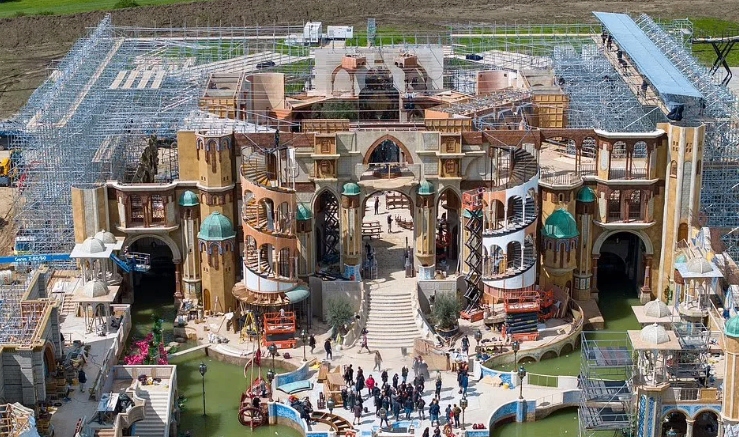
Reimagining the iconic land of Oz for the big screen was a massive undertaking. The production design team had to conceptualize everything from the hallowed halls of Shiz University to the glowing spires of the Emerald City. The goal was to create a world that felt both magical and real.
This was achieved through a unique blend of styles, incorporating everything from Venetian architecture to American modernism. The result is a visual feast that gives new depth to the world of Oz. The following sections will show how this vision was brought to life, from adapting stage magic to telling a story through sets.
Adapting Stage Magic for the Screen
Bringing a beloved stage musical like Wicked to film presents a unique challenge: how do you expand a world confined to a stage into a cinematic universe? The movie adaptation goes far beyond what a theater can contain. Instead of suggestive sets, the film builds entire, immersive environments.
The production used massive backlots and real-life landscapes to create a tangible sense of place. For instance, the journey to Shiz feels vast and real, something a stage production can only hint at. While some elements, like the exterior of the Emerald City, were designed digitally with CGI, the team prioritized practical sets to help the actors feel truly present in the world.
This approach gives the story of Elphaba a new dimension. You're not just watching a play; you're stepping into the world of the Wizard of Oz in a way that feels completely real, from the sprawling countryside to the towering architecture of its cities.
Storytelling through Set Design in Wicked Movie
In Wicked, the production design is more than just a pretty background; it's a key part of the storytelling. Every set is carefully crafted to evoke a specific emotion and move the narrative forward. The blend of practical sets and subtle visual effects creates an environment that feels alive.
For example, when Elphaba and Glinda arrive at the Great Hall in the Emerald City, the space is designed to be towering and intimidating. This makes you feel their awe and fear as they prepare to meet the Wizard. The sets give the actors a real environment to react to, making their performances more authentic and powerful.
From the whimsical charm of the girls' dorm room to the imposing grandeur of the Wizard's throne room, each location has a purpose. The design choices communicate character, power dynamics, and the emotional journey of the characters, proving that in film, the environment is a character in itself.
Creating Munchkinland: From Concept Art to Construction
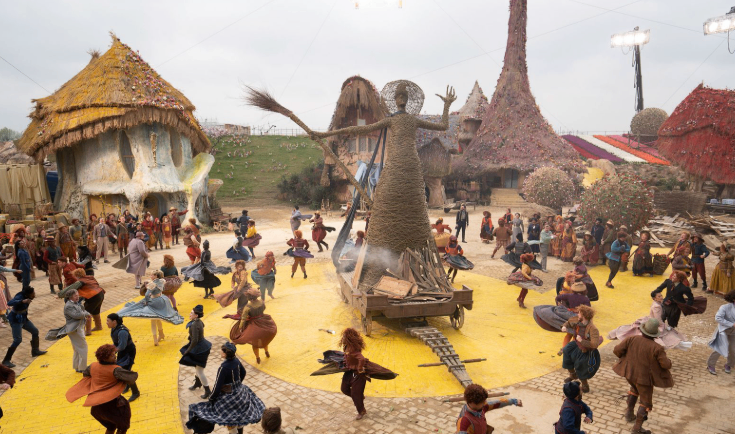
The vision for Munchkinland began as a vibrant tapestry woven from sunshine and tulips. Translating that concept art into a real, physical space was an incredible feat of construction. The team built the entire village on a 6.8-acre backlot in the beautiful Buckinghamshire countryside.
This process involved turning detailed illustrations into a living, breathing town. Millions of real tulips were planted to bring the colorful landscape to life, creating a world that feels both fantastical and completely real. The next sections detail how this magical land was built.
Building the Fantastical Landscape
To create the stunning landscape of Munchkinland, the production team went to extraordinary lengths. They planted nine million real tulips, sourced from a farm in Norfolk, across the British countryside set. This wasn't just for looks; the story imagines the Munchkins as farmers who use the heads of the flowers to create colorful dyes for their clothes.
The village itself was designed with a Middle Earth vibe, featuring stucco houses with whimsical, greenery-covered roofs shaped like witch hats. The central market square overflows with bolts of dyed cloth and intricate tulip carvings on the doors, creating a living kaleidoscope of color and joy.
What's more, the world was built with incredible attention to detail, including a fully realized train, the Emerald City Express. This 106-foot locomotive is a real, functional train that runs through fields of barley, grounding the fantasy in a tangible, believable reality.
Innovative Techniques Used in Wicked Film Set Design
The Wicked set design team used a brilliant mix of practical effects and cutting-edge digital techniques to bring Oz to life. While many sets were physically built, the team used CGI to expand the world and create elements that would be impossible to construct. This seamless blend is one of the film's greatest strengths.
Detailed illustrations were crucial for designing digital elements like the full exterior of the Emerald City. However, the team prioritized building as much as possible. A fantastic example of practical innovation is the Wizard's throne room, which features a 20-foot-high mechanical head operated by hydraulics and a puppeteer.
Other innovative techniques included:
- Drawing inspiration from global architecture, such as Moorish arches and onion domes, to create the unique look of Shiz University.
- Designing and building dynamic sets, like the library's giant, rotating bookshelves, to work in harmony with complex choreography.
- Using a mix of real-world references and fantastical elements for smaller details, like the petal-shaped windows in the dorm room.
Challenges, Highlights, and Recognition of Wicked Set Design
Building a world as vast as Oz came with its share of challenges. The sheer scale of the sets, from Shiz University to Munchkinland, presented major technical obstacles for the production design team. However, their incredible efforts resulted in some of the most memorable visuals in modern cinema.
This hard work has been met with widespread acclaim and recognition. The stunning detail and immersive quality of the sets have earned the film significant praise, including multiple Oscar nominations. The following sections explore the hurdles they overcame and the accolades they received.
Technical Obstacles and Behind-the-Scenes Efforts
The biggest technical obstacle for the Wicked production was the immense scale of the project. Production Designer Nathan Crowley called it the "biggest film" he'd ever done, requiring construction on three massive backlots on the outskirts of London. The effort was enormous, involving building entire cities from the ground up.
To make the sets so impressive, the team dedicated itself to creating a tangible world. For example, students arrive at Shiz University by boat, which required building a water entrance with functional docks. This commitment to practical construction helps the world feel authentic.
The behind-the-scenes effort spanned multiple locations across England, each with a specific purpose to bring Oz to life.
- Sky Studios Elstree
- Main backlots for large-scale construction, including parts of Shiz University.
- Buckinghamshire Countryside
- A 6.8-acre backlot used to build the entire village and landscape of Munchkinland.
- Norfolk
- A flower farm that grew and supplied the nine million real tulips used for Munchkinland.
Accolades and Special Praise for Wicked Set Design
The breathtaking production design of Wicked has earned significant praise from critics and audiences alike. The film's visual artistry was officially recognized with 10 Oscar nominations for the 97th Academy Awards, a remarkable achievement that speaks to the quality of the craftsmanship.
Among these is a highly deserved nomination for Best Production Design. This accolade honors the team's ability to create a world that is both a beautiful homage to the source material and a groundbreaking cinematic experience. Details like the intricate tile work of the Emerald City and the grand, collegiate feel of Shiz University have been singled out for praise.
The special recognition highlights the immense effort that went into every frame. The design successfully balances grandeur with warmth, creating a world that feels both majestic and inviting. It's a masterclass in world-building that has rightfully captured the attention of the film industry.
Conclusion
In conclusion, the set design of Wicked is a masterclass in creativity and innovation, blending artistry with storytelling to create a visually stunning experience. From Nathan Crowley’s impactful contributions to the intricate details of Munchkinland, every element plays a crucial role in bringing the world of Oz to life. The challenges faced by the designers only add to the magic, showcasing their dedication and skill in overcoming obstacles to achieve excellence. As you explore the artistry behind Wicked's set design, remember that each scene is crafted not just to be seen, but to evoke emotions and enhance the narrative. Embrace the wonder of theatrical design and its capacity to transport us to fantastical realms.
Frequently Asked Questions
How does set design for Wicked differ between the movie and stage show?
The movie’s production design expands the world of Wicked far beyond the stage. Instead of suggestive sets, it uses massive practical locations and CGI to create a fully immersive Oz. You get to see sprawling landscapes and a vast Emerald City in a way that is physically impossible in a theater.
What details in Wicked’s set design have been recognized or awarded?
The film’s incredible artistry earned 10 Oscar nominations, including one for Best Production Design. Specific details that have received recognition include the grand architecture of Shiz University and the intricate design of the Emerald City, which pay homage to the original story while creating something entirely new and breathtaking.
Are digital effects used in Wicked set design or is it mostly practical sets?
The design of Wicked cleverly blends both. While visual effects and CGI were used for things like the Emerald City's exterior, the production prioritized building practical sets. This approach, which included constructing entire villages and functional contraptions, helps make the world feel tangible and real for both the actors and the audience.